Wine in Ancient Art : Symbolism and Mythological References
Antiquity : Wine, a Central Element of Social and Religious Life
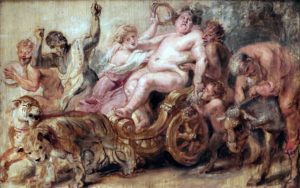
Wine has always held a special place in human history, not only as a beverage but also as a symbol deeply rooted in ancient cultures. In Ancient Greece, it was associated with Dionysus, the god of wine, festivity, and ecstasy. Greek mythology often presents wine as a means of achieving spiritual transcendence and a connection to the divine universe. Wine production and consumption were integral to social celebrations. The Greeks also used wine in religious rituals, and these traditions were reflected in the art of the time.
Painted vases, such as kylix (large drinking cups used at banquets), are remarkable witnesses to this era. These works depicted mythological scenes in which Dionysus, often accompanied by his companions, was celebrated through festivities and rituals dedicated to wine. In Rome, this tradition continued with mosaics like the “Triumph of Bacchus”, highlighting not only the figure of the god of wine but also the importance of this beverage in feasts and social rites. These works symbolized abundance, fertility, and harmony with nature.
Thus, in antiquity, wine was more than just a drink: it embodied social balance, religious devotion, and cultural expression. It was celebrated not only as a source of pleasure but also as a means of honoring the gods and natural forces, a theme widely represented in the art of the time.
The Middle Ages : Wine as a Religious Symbol
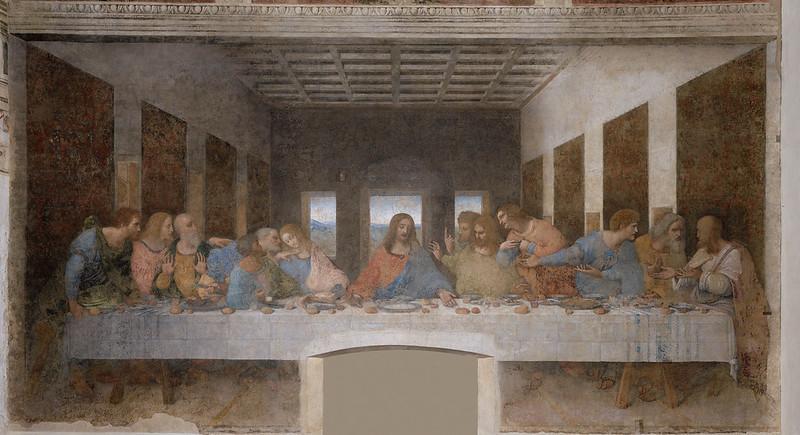
During the Middle Ages, the perception of wine evolved, especially within Christian art. In the religious imagination of the time, wine was a profound symbol of sacrifice and redemption. Wine represented the blood of Christ in the context of the Last Supper and was therefore a central element of Christian liturgy. It served as a means of sanctification, through which believers participated in the mystery of Christ’s Passion.
In frescoes and stained glass from the period, wine is often depicted in religious scenes such as the Last Supper or in representations of the life of Saint Vincent, where it embodies divine sacrifice. More symbolically, some Christian artists also represented Christ as “the true vine,” an important symbol in Christian theology referring to the spiritual relationship between Jesus and his disciples. This spiritual and symbolic dimension of wine in medieval art highlights its role far beyond mere consumption; it becomes a bridge between the sacred and the profane, marking transitions between different spheres of human life.
The Renaissance and the Baroque Age : Humanization and Memento Mori
The Renaissance: Wine as a Symbol of Excess and Sensuality
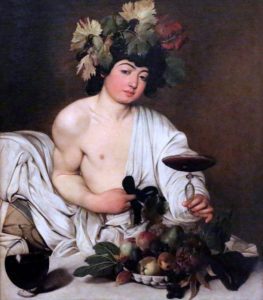
The Renaissance era marked a decisive turning point in the way artists portrayed wine. Far from merely representing it as a simple drink or a divine symbol, wine became an object of pleasure and exuberance in works of art. One of the most emblematic artists of this period, Caravaggio, approached wine from an unprecedented angle, depicting it as an element of sensual devotion and corporeal enjoyment. In his famous paintings, Bacchus, the god of wine, is often shown in a state of relaxation and indulgence, sometimes even in a state of uninhibited revelry. The tension between the divine and the earthly is reflected in this humanization of Bacchus, a devotional god, but also a figure of pleasure and decadence.
In these depictions, wine becomes a symbol of both enjoyment and mortality. Caravaggio’s works marked the beginning of a new era of reflection on the fragility of human life, a reflection intensified by themes of excess and debauchery. This treatment of wine as an object of sensuality, as well as a means of liberation from social constraints, is a central theme in Renaissance art.
The Baroque Age : Wine and Reflection on Mortality
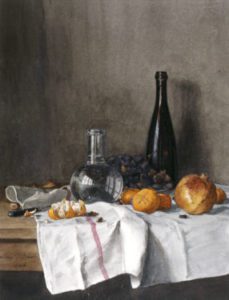
Baroque art, particularly in Flanders and the Netherlands, continued to explore the fleeting nature of human existence. Still lifes, a genre that flourished during this period, often depicted everyday objects, fruits, glasses of wine, tableware, in compositions rich with realistic detail. However, these scenes were not merely celebrations of the beauty and prosperity of earthly life; they also served as reminders of its fragility and impermanence.
Paintings by artists such as Osias Beert or Willem Claeszoon Heda, which depicted glasses of wine and opened bottles, conveyed a message of vanity. In this context, wine becomes a symbol of human vanityand finitude. The ephemeral beauty of life, symbolized by everyday objects, invites deep reflection on mortality and the transience of material pleasures.
These Baroque works did not merely celebrate earthly pleasures; they prompted viewers to consider the meaning of those pleasures, their transient nature, and the need to live fully, knowing that everything, including wine, can vanish in an instant.
Modern and Contemporary Art : Wine as a Subject of Reflection and a Medium of Expression
Impressionism and Post-Impressionism : Wine in Everyday Life Scenes

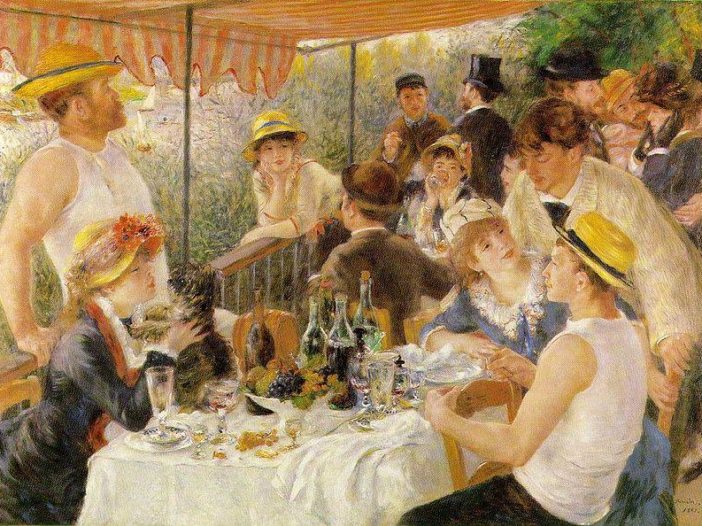
By the end of the 19th century, Impressionism transformed the approach to painting, and with it, artists turned more toward scenes of everyday life. Wine, while still symbolic, now became a real element integrated into daily moments. Artists such as Édouard Manet, in his iconic painting “Le Déjeuner sur l’herbe”, chose to depict outdoor meals where wine is served alongside simple dishes, capturing the lightness and uninhibitednature of the moment.
In his works, Manet does more than reproduce a convivial scene ; he also introduces social tension and subtle critique of the conventions of his time. Wine becomes a vehicle for shared intimacy, but also a way to reveal social complexities.
Wine and nature are also important themes in the work of Vincent Van Gogh, whose “The Red Vineyards” depicts the agricultural landscape while highlighting the importance of wine in the rural economy and the daily lives of workers. In this painting, wine is not merely an isolated subject; it is part of a whole, a landscape where humans and nature are connected through labor, time, and the land. Van Gogh’s painting, with its vivid colors and dynamic movement, captures the very essence of the relationship between wine and the natural elements that give it life.
In Impressionism and Post-Impressionism, wine is no longer just a symbolic or religious object; it becomes a narrative element serving the story the artist tells, whether about pleasure, labor, or social reflection.
Cubism and Modernism: An Abstract Representation of Wine

At the beginning of the 20th century, the emergence of Cubism transformed the way artists perceived and represented the world around them. Artists such as Pablo Picasso incorporated everyday objects, including wine, into fragmented and geometric representations. In works like « The Bottle of Wine », Picasso deconstructs the traditional form of wine, placing it in a dimension where its contours and symbols are scattered and reassembled through geometric shapes, offering a new perspective on this beverage.
In Cubism, wine thus becomes an element in the deconstruction of visual reality. It is no longer simply an object observed from a single angle but a concept explored from multiple facets, juxtaposing different viewpoints to provide a fresh perception of the ordinary. This treatment of wine perfectly illustrates the modernist artists’ desire to reinvent reality through fragmentation and recomposition, two essential principles of Cubism.
Pop Art of the 1960s, led by artists such as Andy Warhol, also revisited wine, but this time from the perspective of democratizing art. Warhol took everyday consumer objects and elevated them to artistic icons, including wine bottles or images from wine advertisements. Art no longer aimed merely to celebrate the aesthetic aspect of wine but to make it a symbol of popular culture, on the same level as souvenirs and commercial objects that define consumer society.
Thus, 20th-century art, through Cubism, Modernism, and Pop Art, sought to redefine wine, transforming it from a simple subject of contemplation into an object of reflection on society, consumption, and individuality. Far from being limited to figurative representation, wine in modern art became a medium for experimentation.
Using Wine as a Medium in Painting: Artists and Innovative Techniques
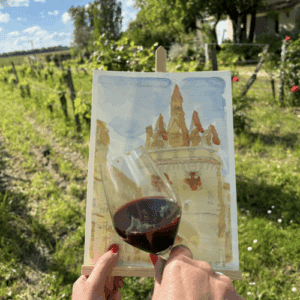
In contemporary art, wine has established itself as a true medium in its own right. Many artists have chosen to use it not only as a subject but also as a creative tool. Artists such as Christina LoCascio and Elisabetta Rogai have explored the idea of painting directly with wine, creating unique works deeply connected to the material itself. By using different shades of red, these artists transform wine into paint to create portraits, landscapes, or even abstract scenes. In this context, workshops like Painting with Wine, led by Laetitia Ouspointour, offer a unique opportunity to experiment with this technique and extend the encounter between art and wine in a playful and immersive way.
These artists do not see wine merely as an aesthetic element, but also as a symbolic medium, where the color and texture of the wine add additional meaning to the work. In this case, wine embodies the art of transformation and alchemy, both in the creative process and in its interaction with the viewer.
Wine and Installation Art : A New Sensory Approach
Today, contemporary artists go even further by incorporating wine into artistic installations that engage not only sight but also smell, taste, and even hearing. Installations featuring wine bottles, barrels, or spaces where visitors can taste wines while observing the artwork create an immersive and multisensory experience.
For example, in art galleries or museums such as La Cité du Vin in Bordeaux, exhibitions invite visitors to explore the connections between art and wine by participating in tastings or engaging with works in which wine is both a material and a means of expression. These installations play on the ephemeral and intangible nature of wine while placing it in an artistic context where it becomes a meta-reality, offering viewers a space for reflection and interaction.
In short, contemporary art has succeeded in making wine a medium in its own right, integrating it into works where aesthetic and sensory sensibilities come together to offer a unique experience. Wine has become not only a subject of reflection but also a tool of expression, allowing artists to transcend the traditional boundaries of art.
Wine and Art in Exhibitions : Celebrating the Alliance Between Creation and Tradition
Wine in International Exhibitions: Picasso, Chagall, and Other Famous Artists
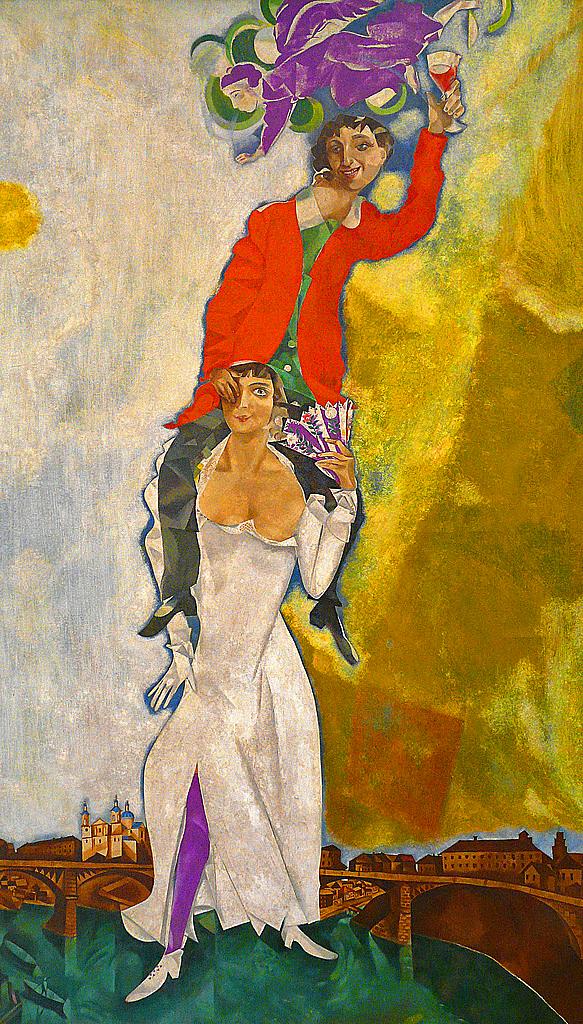
Wine has also been a subject of veneration in exhibitions dedicated to iconic artists such as Pablo Picassoand Marc Chagall. For example, a series of exhibitions have highlighted the influence of wine on these masters of modern art, showing how this beverage inspired some of their most famous works. Picasso, in particular, used wine in several of his pieces to question perception, excess, and the absurdity of the social norms of his time.
Marc Chagall, on the other hand, explored wine in his works as a symbol of joy and fulfillment, often associated with scenes of festivities, dance, and conviviality. These works testify to the importance of wine in the collective imagination of 20th-century artists, where it symbolizes freedom of expression and escape into parallel worlds.
Temporary exhibitions in prestigious museums such as the Musée d’Orsay in Paris or the MoMA in New York continue to explore the place of wine in the creations of these masters, offering insight into how this beverage has traversed the ages to become a true narrative element and a subject of introspection for artists.
Artistic Venues : La Cité du Vin and Other Cultural Spaces

In the realm of art, exhibitions dedicated to the world of wine are becoming increasingly common. These events do more than showcase wine in its traditional form, they explore its connections to art, culture, and society. One emblematic venue illustrating this intersection of wine and art is La Cité du Vin, located in Bordeaux, the world capital of wine. This interactive cultural museum highlights the history, culture, and artistic practices surrounding wine. Through its permanent and temporary exhibitions, it creates bridges between the two worlds, offering visual journeys where wine is both an art object and a source of inspiration.
In this space, contemporary artists have the opportunity to present works directly related to wine, whether paintings, sculptures, or interactive installations. In addition to these exhibitions, regular events allow the public to discover the fusion of art and wine. Visitors can explore the artistic creation process in a sensory and playful way while tasting various vintages.
Art Residencies in Vineyards : A Creative Immersion
Wine is not limited to the walls of museums or galleries. Increasingly, wineries offer artist residencies where creators from all backgrounds can immerse themselves in the world of wine and draw inspiration for their work. These residencies allow artists to work directly in the vineyards, explore the landscapes and harvests, and discover traditions linked to winemaking. They provide a true immersion in an environment where art and wine meet harmoniously.
These artist residencies take many forms, from painting and writing to installations. For example, some have resulted in sculptures made from wine-related materials, such as barrels or leftover wine, while others have seen creations where wine itself becomes the central element, acting as a catalyst for a unique artistic experience.
These collaborations between the worlds of art and wine help to enhance the cultural heritage of vineyards while encouraging innovative artistic approaches, where winemaking traditions and artistic expression intertwine to give rise to singular works.


Leave a Reply