
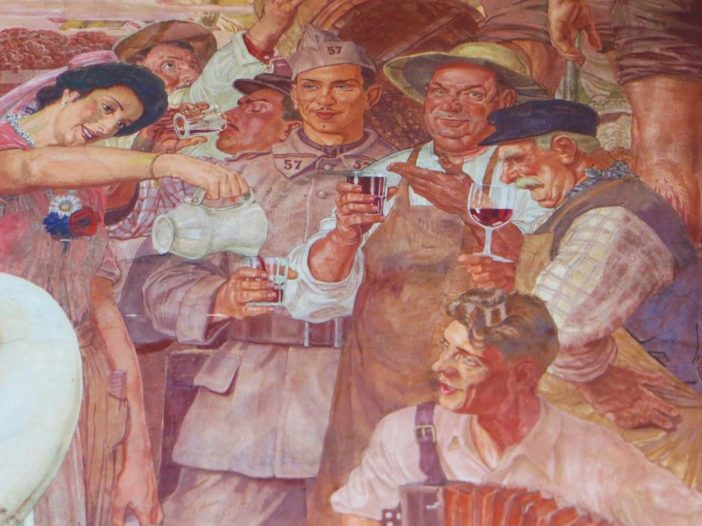
Wine, more than just a drink, is a true witness to the evolution of civilizations. From Antiquity to the present day, it has crossed ages and cultures, constantly reinventing itself and adapting to the social and geographical contexts of each era. This article explores how wine evolved through different civilizations and highlights the archaeological discoveries that testify to this millennia-old history.
The Origins of Wine
The earliest traces of winemaking date back to around 6000 BCE, in the Caucasus region, which includes present-day Georgia. Archaeological remnants, notably clay jars containing residues of fermented grapes, have been discovered, proving that the peoples of this region had already mastered the art of transforming grapes into wine.
The Egyptians, around 3000 BCE, also played a crucial role in the history of wine. Frescoes found in pharaonic tombs depict scenes of grape harvesting and winemaking. Wine was used in funerary rites and religious ceremonies, highlighting its symbolic and social significance.
Wine in Ancient Greece and Rome

The ancient Greeks were among the first to make wine an integral part of their daily culture. Dionysus, the god of wine and festivity, held a central place in Greek mythology. Wine was consumed during symposia, social gatherings where participants debated philosophy and politics while drinking wine diluted with water.
The Romans inherited this winemaking tradition and refined it further. They introduced new techniques for vine cultivation and winemaking, some of which are still used today. The Romans also spread viticulture throughout their empire, including Gaul (modern-day France), Spain, and Germany, laying the foundations for Europe’s major wine regions
The Middle Ages: Monastic Flourishing
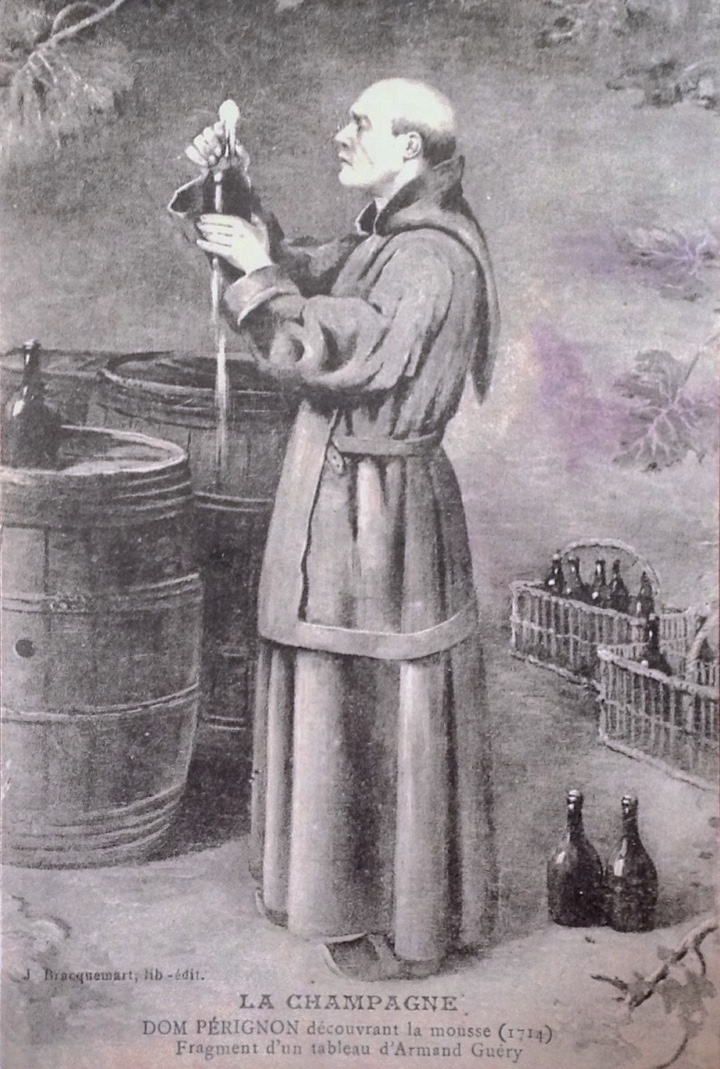
During the Renaissance, wine culture expanded beyond the monasteries as trade, exploration, and scientific inquiry flourished. Viticulture benefited from new techniques in vineyard management, fermentation, and storage, improving both quality and consistency.
European wine regions began to gain wider recognition, and wine became increasingly integrated into daily life, cuisine, and social customs. This period also saw the beginnings of wine classification and the development of appellations, laying the groundwork for the modern wine industry.
From the Renaissance onward, wine evolved not only as a beverage but also as a symbol of culture, refinement, and regional identity.
The Renaissance and the Early Modern Age

Wine and the Industrial Revolutions

The 19th century brought major upheavals to wine production. The industrial era introduced innovations such as bottling and the use of cork stoppers, improving both the preservation and transportation of wine. However, this period was also marked by challenges, notably the phylloxera crisis, an invasive insect that destroyed much of Europe’s vineyards. Solutions, such as grafting European vines onto resistant American rootstocks, helped save the wine industry.
Wine Today

Today, wine is a global beverage, produced and enjoyed on every continent. Modern viticulture and winemaking techniques, combined with a growing focus on quality and authenticity, have led to a true renaissance in wine culture. Regions once little known, such as New Zealand or Chile, now produce wines of international renown.
Recent Archaeological Discoveries
Archaeological findings continue to deepen our understanding of wine’s history. In 2011, a team of researchers uncovered the oldest known wine cellar in Armenia, dating back to 4100 B.C. This discovery included a grape-pressing facility, fermentation jars, and drinking vessels, confirming that wine production was already a sophisticated activity at that time.
In Israel, excavations revealed wine presses from the Roman era, while in France, Celtic amphorae and wine containers have been unearthed, highlighting the importance of wine in these ancient cultures.
Through the ages, wine has been far more than a mere beverage. It has symbolized culture, religion, pleasure, and community. From Antiquity to the present day, every civilization has left its mark on winemaking traditions, weaving a rich tapestry of history and flavor. When we raise our glass today, we are not only savoring a product of the vine but also a millennium of human history and passion.


Leave a Reply